|
|
|
Sessions > Session 6
26 March 2026
14:00 - 15:15 - Auditorium de la Grande Galerie de l'Évolution
Food security, nutrition and sanitary risks of marine invertebrates
Session chair: Eva Maire, French National Research Institute for Sustainable Development (IRD), France
Nutrients on the move: production, export, and domestic retention of nutrients from farmed molluscs in South Africa
Maria J. Darias1, Brett M. Macey2,3, Suné Henning4, John J. Bolton3, Frank T. Wieringa5, Maretha Opperman6
1 MARBEC, Univ Montpellier, CNRS, Ifremer, IRD, Montpellier, France
2 Department of Forestry, Fisheries & the Environment, Aquaculture Innovation and Technology Development, Sea Point, South Africa
3 Department of Biological Sciences, University of Cape Town, Cape Town, South Africa
4 Department of Food Science and Technology, CPUT, Bellville, South Africa
5 UMR QualiSud, Univ Montpellier, Avignon University, CIRAD, Institut Agro, IRD, Univ La Réunion, Montpellier, France
6 Department of Biotechnology and Consumer Science, Functional Foods Research Unit, CPUT, Bellville, South Africa
Keywords: Molluscs; marine aquaculture; aquatic food trade; nutrient retention; omega-3 fatty acids; micronutrients
Among aquatic foods, farmed mollusc production—particularly bivalves—offers one of the strongest combinations of a low environmental footprint and high nutritional value. Yet export-oriented trade can shift nutritional benefits away from producing regions. This study quantifies this trade-off for farmed molluscs in South Africa—Africa’s largest mollusc producer—by tracing nutrients from production to exports and domestic retention during 2000–2020. We integrated production statistics (FAO FishStat), species-level trade flows (ARTIS database), and nutrient composition analyses of edible tissues for abalone (Haliotis midae), mussels (Mytilus galloprovincialis), and oysters (Magallana gigas) across eight priority nutrients (EPA+DHA, iodine, zinc, selenium, iron, calcium, vitamin A, vitamin D). Annual nutrient production was estimated from species-specific composition and edible yield, then partitioned into exported versus domestically retained nutrient masses and expressed as annual recommended nutrient intake (RNI) equivalents for women aged 19–50 years. Mollusc production increased ~5-fold from 2000 to 2020, while exports rose ~17-fold. The share of nutrient production retained domestically varied substantially. Between 2000–2004 and 2016–2020 (five-year means), the retention share declined from ~65–69% to ~23–40%, but retained annual RNI equivalents increased ~1.3–2.5-fold, depending on the nutrient. Over 2016–2020, mussels accounted for the majority of exported and retained RNI equivalents across nutrients, except for exported calcium, iron, and vitamin D, for which abalone contributed the most. By moving beyond tonnes to nutrient-based metrics, this approach links aquaculture development and trade to food-security outcomes, supporting nutrition-sensitive strategies and nutrition-weighted sustainability assessments in aquatic food systems.
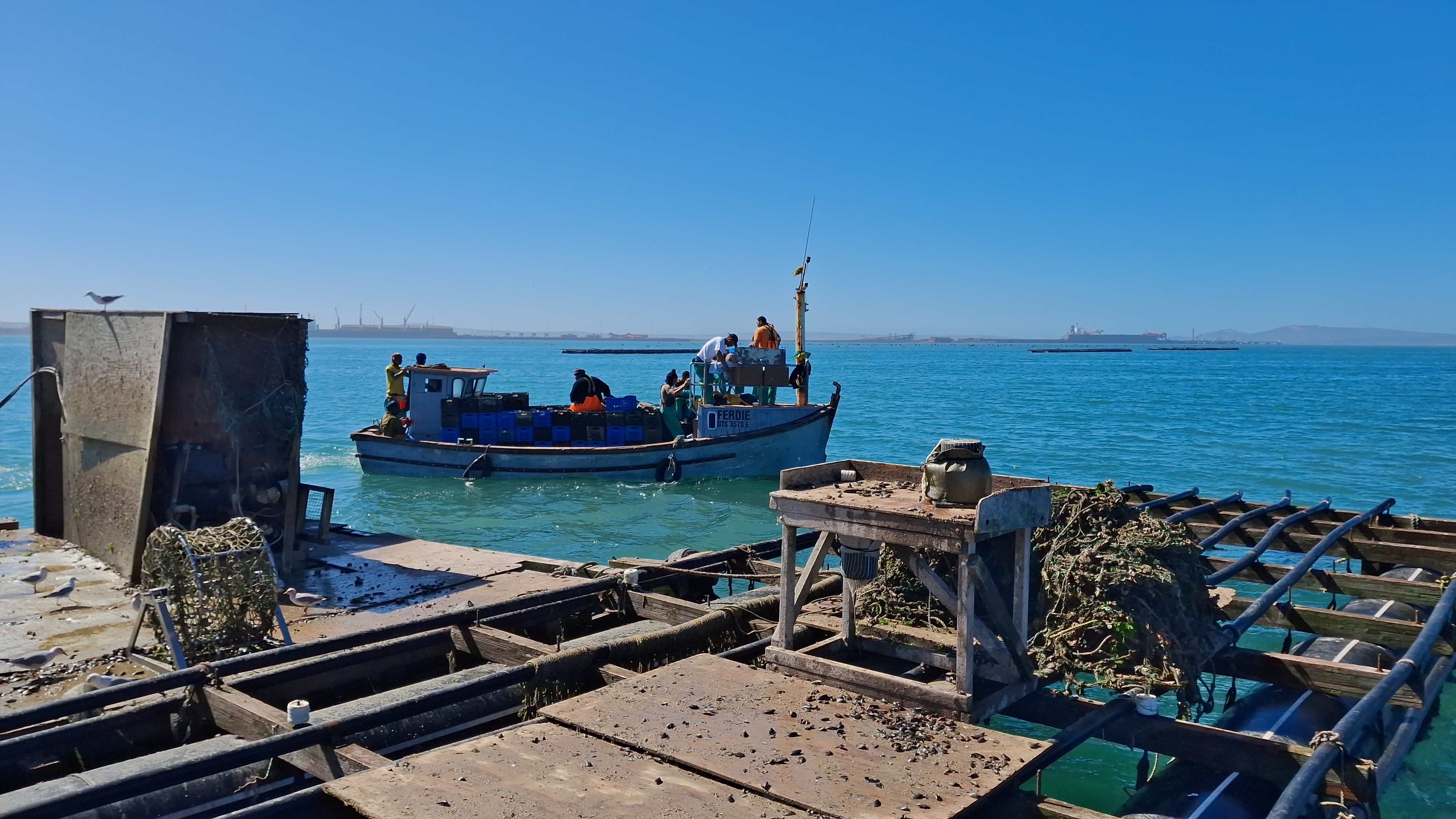
Picture: Mussel farm in Saldanha Bay, South Africa.
© Maria Darias
Predicting the nutrient content of aquatic invertebrates (and other aquatic foods...)
James P.W. Robinson1, Jessica Zamborain-Mason1,2,5, Eva Maire1,3, M. Aaron MacNeil4, Christopher D. Golden5, Christina C. Hicks1
1Lancaster Environment Centre, Lancaster University; Lancaster, LA1 4YW, UK
2Biological and Environmental Science and Engineering Division, King Abdullah University of Science and Technology, Thuwal, Kingdom of Saudi Arabia
3Marine Biodiversity Exploitation and Conservation, Univ Montpellier, CNRS, Ifremer, IRD, Montpellier 34090, France
4Department of Biology, Dalhousie University; Halifax, B3H 4R2, Canada
5Department of Nutrition, Harvard T.H. Chan School of Public Health; Boston, 02115, USA
Keywords: micronutrients, food security, fisheries, nutrition, aquaculture
Aquatic foods produced by wild-caught fisheries and aquaculture systems provide essential nutrients to billions of people around the world. Recent global studies have developed understanding of how finfish support healthy diets, particularly in low- and middle-income countries. However, we lack equivalent understanding for underrepresented aquatic foods, such as aquatic invertebrates.
Here, combining data on aquaculture production, marine capture fisheries and invertebrate nutrient composition, we quantify the contribution of aquatic invertebrates to global nutrient supplies, and develop a trait-based model to predict concentrations of 30 nutrients important for public health. Our analysis reveals that aquatic invertebrates are exceptionally nutrient dense, with current global supply providing billions of people with recommended intakes of vitamin B-12, iodine, zinc, and omega-3 fatty acids. Species' nutrient composition was predicted by taxonomy, body part, food preparation (e.g. processing form), and environmental and life-history factors (e.g., habitat and thermal regime). Using these statistical models, we provide nutrient estimates for >50,000 invertebrate species registered globally, supporting new avenues of research on human - marine invertebrate interactions.
We conclude by discussing recent advances in modelling of fish and invertebrate nutrient content, which have helped to reveal fisheries contributions to human health, and aligned with efforts to develop nutrition-sensitive aquatic food systems.
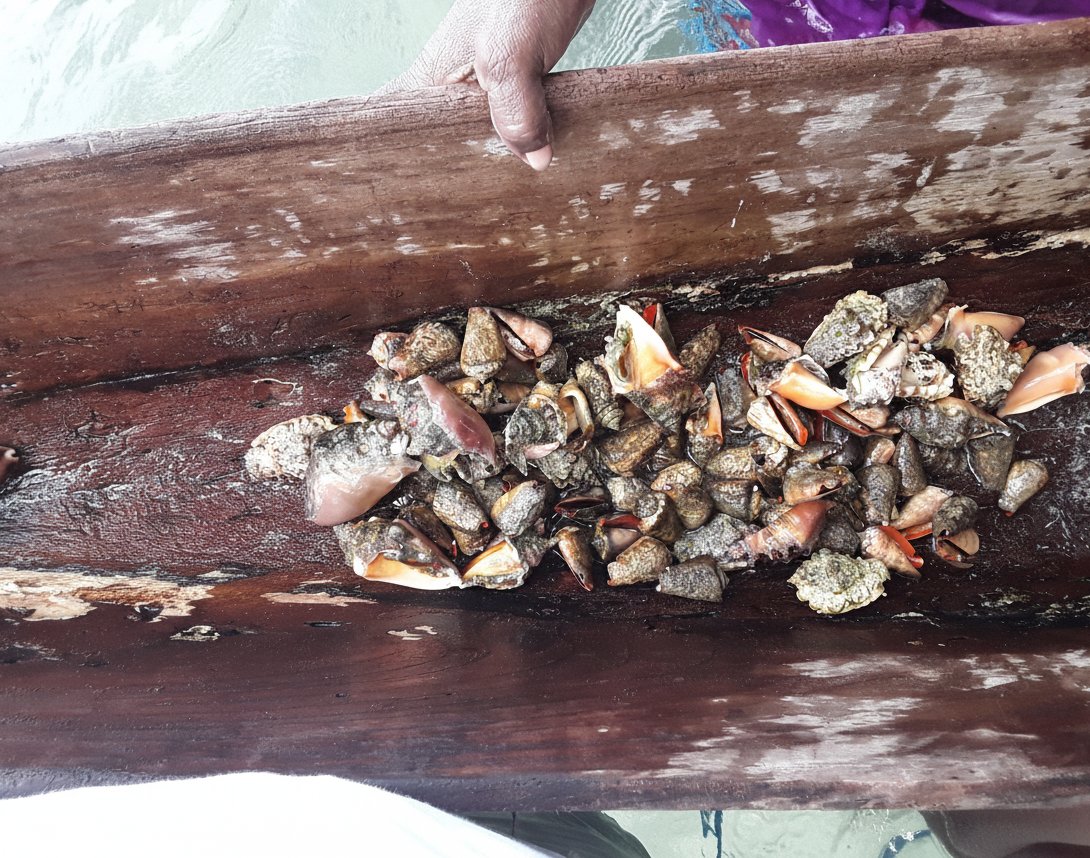
Picture: Aquatic invertebrates, including gastropods from the family Strombidae, are harvested by small-scale fisheries in Papua New Guinea.
© Jessica Zamborain-Mason
Microbiological monitoring of shellfish production areas in France: approaches, socio-economic impacts, and research perspectives
Yann Reynaud1
1Ifremer, Unité MASAE, LSEM, Nantes, France
Keywords: shellfish contamination, Escherichia coli, modeling, omics, emergence
The REMI network is France’s national program for monitoring the microbiological quality of shellfish production areas. Coordinated by Ifremer since 1989 and overseen by the French Ministry of Agriculture, REMI plays a key role in ensuring the safety of shellfish for human consumption and in protecting the shellfish farming industry.
The network focuses primarily on detecting Escherichia coli, a standard indicator of fecal contamination, through regular sampling of shellfish in over 340 coastal production sites. Based on annual revision, areas are classified (A, B, or C) according to European regulations, which determine whether shellfish can be sold directly, require purification, relaying, heat treatment or cannot be harvested. An alert system also allows for the management of unusual episodes of contamination and risks related in particular to heavy rainfall or a failure of the wastewater network.
Beyond regulatory compliance, REMI contributes to a broader understanding of coastal water quality, identifying pollution trends and supporting local and national management strategies. Its long-term dataset also provides valuable insights for research on environmental change and public health risks.
At the intersection of aquaculture, food safety, and public policy, the REMI network exemplifies how coordinated environmental monitoring supports sustainable seafood production and consumer protection.
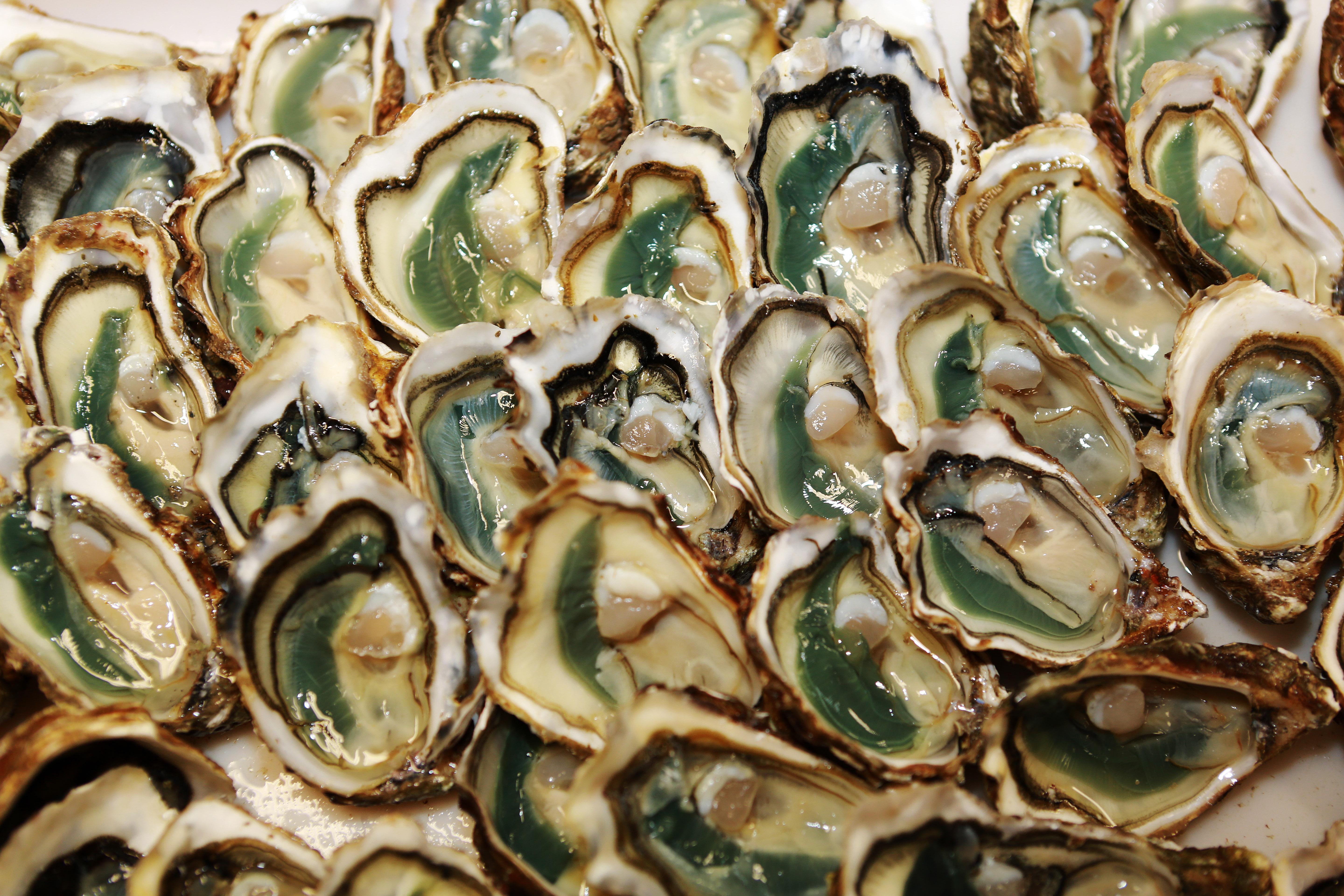
Picture: Green gills in the cupped oyster (Magallana gigas), the most commonly farmed oyster species in France. Ifremer oversees REMI, a network responsible for monitoring microbiological contamination in shellfish across mainland France.
© Degremont Lionel (2013), Ifremer
Cephalopods at the crossroads of fisheries, contamination, and environmental change
Thomas Lacoue-Labarthe1
1Littoral Environnement et Sociétés (LIENSs), UMR 7266 CNRS – La Rochelle Université, 2 rue Olympe de Gouges, 17000, La Rochelle, France.
Keywords: cephalopod, seafood safety, metals, climate change
Modern cephalopods are remarkable molluscs with rapid growth, short lifespans, and strong life history plasticity. Fuelled by the loss of their shells, they have evolved complex predatory and anti-predatory behaviours alongside the development of large brains. They have evolved numerous convergent traits with the fish with which they compete for similar ecological niches. Coastal species are widely consumed by humans for their taste and nutritional value, and their global captures tended to increase over the last decades. They are also known to accumulate efficiently chemical contaminants, especially trace metals. Due to their pivotal place in trophic webs, they play a key role in the metal intake by top predators including humans. Since the 1970s, research into trace metal concentrations in cephalopods has mainly been motivated by concerns about the risk of consumption. A literature review showed that seafood safety can be compromised in rare cases, depending on the harvested species, the consumed tissues, and food culture. Their composition in essential elements, proteins and fatty acids makes them a promising resource for future fisheries and aquaculture, a subject of debate. However, climate change and pollution could compromise their high plasticity and resilience. For example, the cuttlefish Sepia officinalis, the 6th French fishery resource, showed a declining in catches in the Bay of Biscay over the last decade. This questions the impact of environmental drivers such as temperature, acidification, and contaminants on their unique biological traits that drive their population renewal.
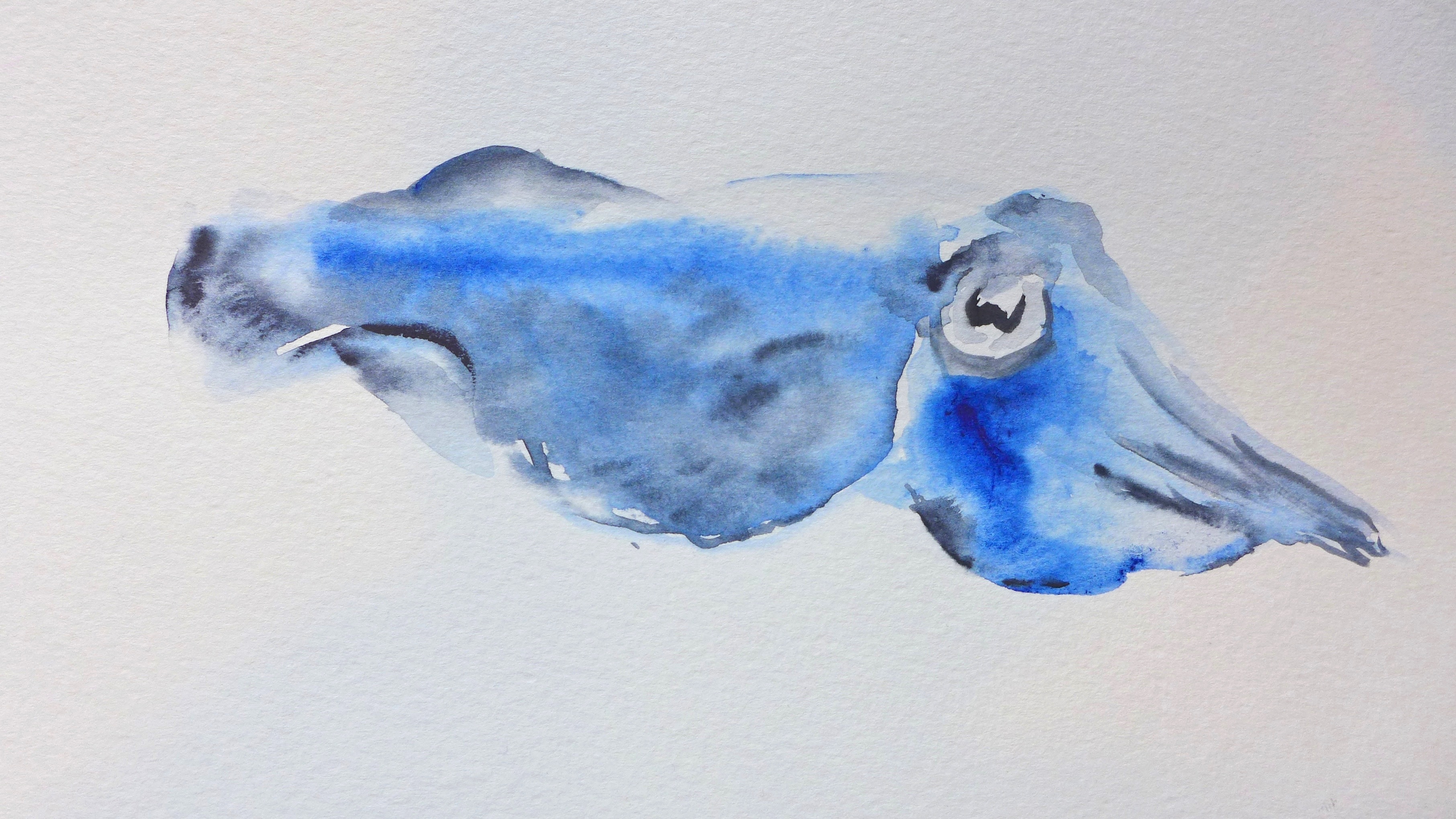
Picture: Watercolor of the common cuttlefish, Sepia officinalis, the first cephalopod resource for French fisheries.
© Drawing by Thierry Guyot


