|
|
|
Sessions > Session 2
25 March 2026
14:00 - 15:15 - Auditorium de la Grande Galerie de l'Évolution
Marine invertebrate fisheries
Session chair: Yoann Thomas, French National Research Institute for Sustainable Development (IRD), France
Rising stars, moon and tides: the cultural and ecological dynamics of the sea worm Palola viridis fishery in Timor-Leste
Joctan Dos Reis Lopes1, Nicodemos dos Santos2, Zeconio dos Santos2, Ariadna Burgos3
1 French National Museum of Natural History (MNHN), France
2 Universidade Nacional Timor Lorosa'e (UNTL), Timor-Leste
3 French National Research Institute for Sustainable Development (IRD), France
Keywords: annelids, aquatic foods, collective fisheries, local knowledge, socio-ecological change, sustainability
Palola viridis is an edible sea worm with cultural, nutritional, and medicinal values in the Asia-Pacific region. In Timor-Leste, Palola viridis is known as "meci" by the Fataluku indigenous community in the Lautem municipality. The meci fishery occurs once or twice a year during the spawning events, which coincide with a specific position of the stars, the lunar phase and tidal cycles. It involves significant social and cultural interactions linked to the sea, with ancient ritual ceremonies and communal harvest. We conducted ethnoecological research to understand the cultural and ecological dynamics of the meci fishery. Methods included interviews, participatory observation, and assessment of meci landings. Results show that this fishery represents a significant cultural gathering, drawing over 5,000 participants across gender and age groups from both coastal and inland communities of Fataluku. Meci fishing landings averaged 300 grams per person, with all landings used for household consumption. Today, the introduction of new fishing tools and electronic devices are undermining traditional ceremonial practices, generating social tensions across generations and clan groups. To enhance understanding and sustainability, we advocate for strengthening intergenerational transmission of traditional knowledge and institutional recognition through government facilitation of year-round community dialogue spaces preceding harvest periods.
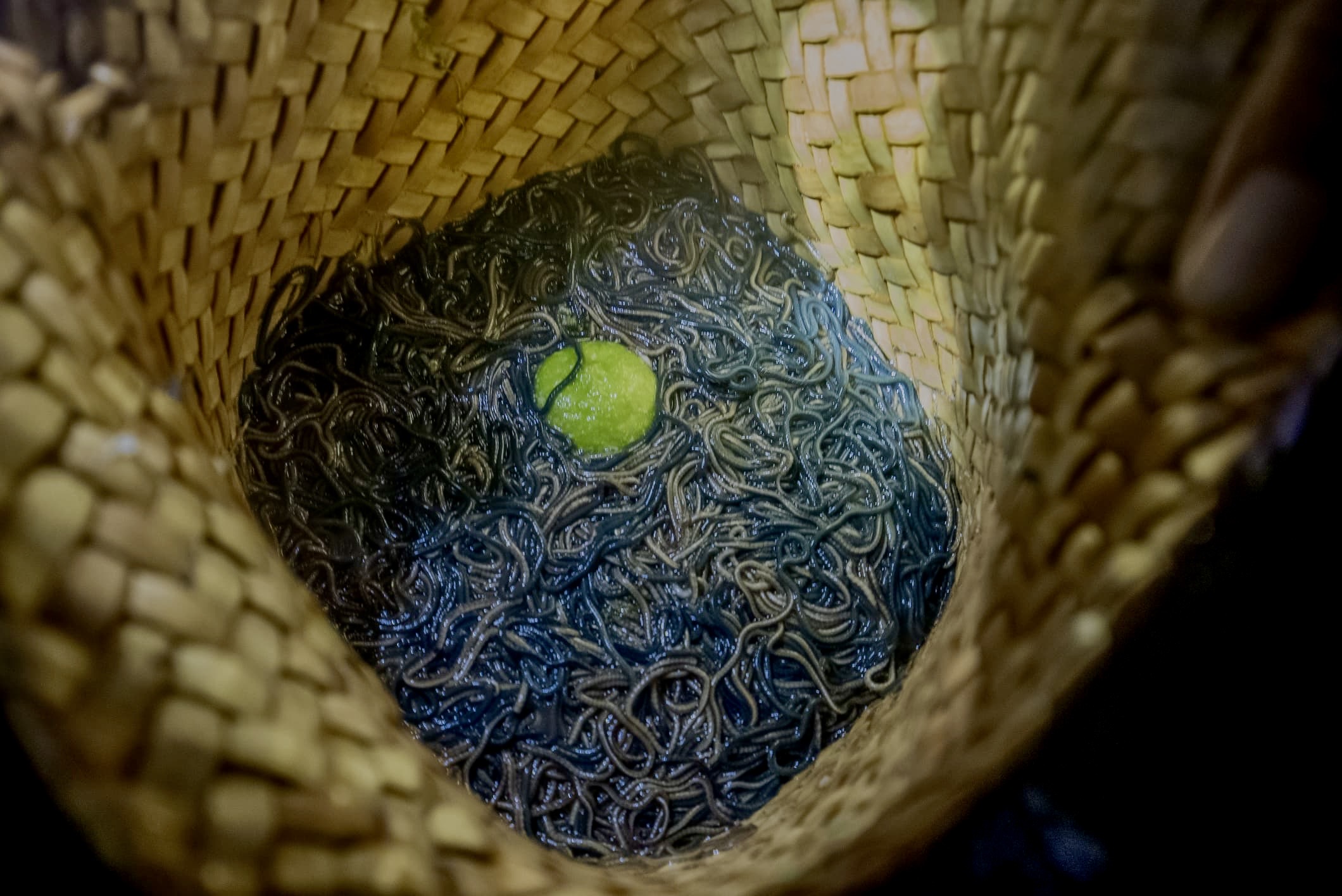
Picture: The meci consists of the posterior reproductive segments of the seaworm Palola viridis. During spawining periods, once or twice a year, these segments separate from the main body and migrate to the surface of coastal waters where they are harvested as a delicacy by coastal communities.
© Jafet Potenzo Lopes
Forgotten fisheries: characterizing small-scale shellfisheries in Solomon Islands
Jan van der Ploeg1, Meshach Sukulu2 & Hampus Eriksson3
1Van Hall Larenstein University of Applied Sciences, The Netherlands
2WorldFish, Solomon Islands
3University of Wollongong, Australia
Keywords: small-scale fisheries, community-based resource management, Pacific, food security, rural livelihoods, extractive industries
Shells are of critical importance for food security in the Pacific, but a paucity of information hampers informed decision-making on, and investments in, these fisheries. In Solomon Islands it is estimated that marine molluscs account for almost 30 percent of subsistence catches. Shells are primarily collected and bartered by women and are an important source of income for households in the rural areas. Shells are a prominent feature of culture and art, and provide a range of essential environmental services. However, shellfisheries remain structurally overlooked and undervalued by policy makers, development practitioners and conservationists. To effectively sustain rural livelihoods and conserve biodiversity it is essential to address this blind spot. In this paper we present the results of creel surveys in 12 villages on Malaita, the most densely populated island of the archipelago. Our findings highlight the diversity of shellfisheries on the island in both space and time, and the detrimental effects of overfishing and sedimentation. These findings have important implications for community-based resource management..
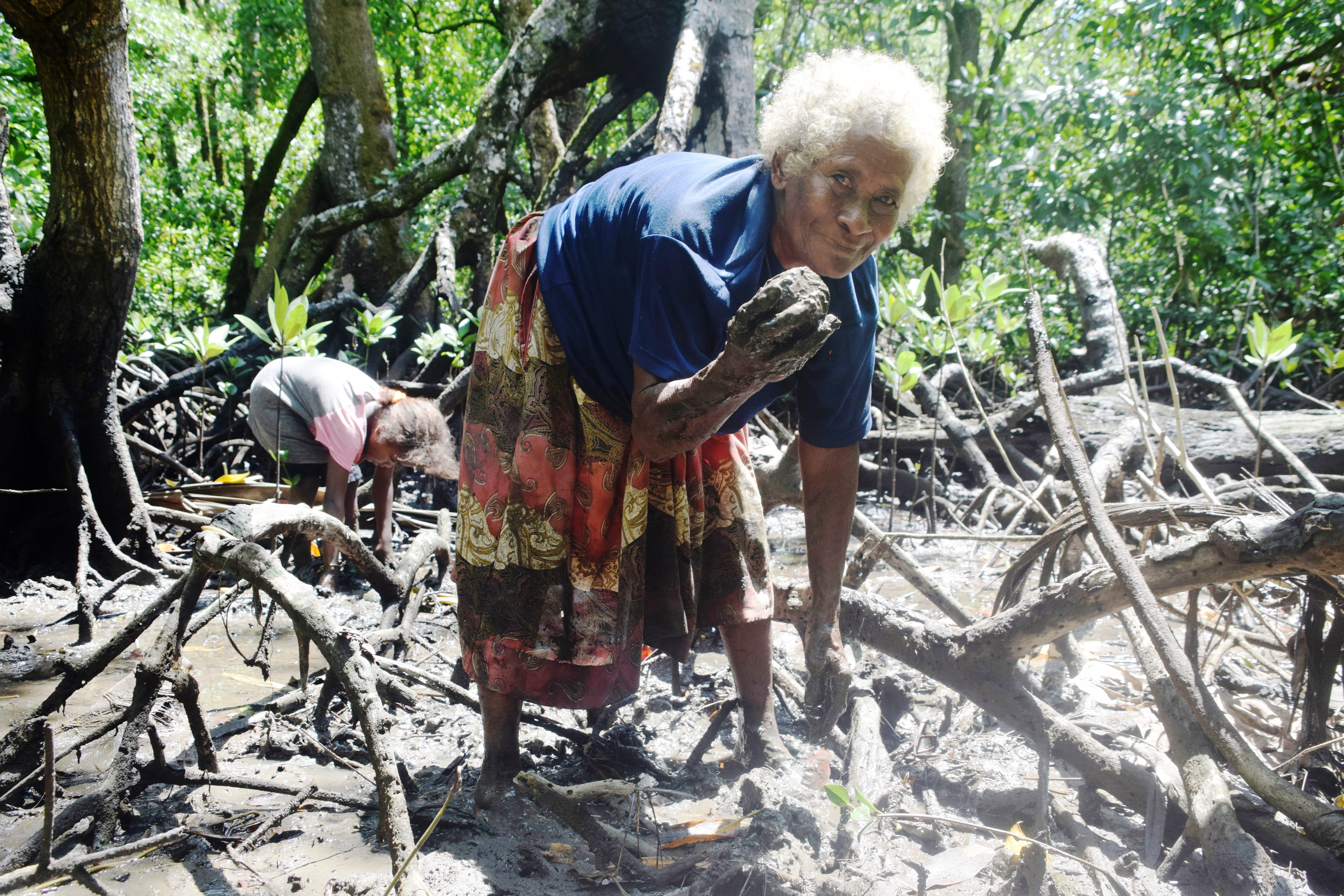
Picture: Nelli Paikai collects mud shells in the mangroves (Solomon Islands 2018).
© Jan van der Ploeg
Crossing the tides: an interdisciplinary journey to understand gleaning fisheries
Benedetta Longoni1, Ariadna Burgos2
1 James Cook University, Townsville, QLD, Australia
2 French Research Institute for Sustainable Development (IRD), France
Keywords: marine invertebrates, gleaning, local ecological knowledge, gender, transdisciplinary approaches, coastal sustainability
All over the coastline of Timor-Leste, in Southeast Asia, it is common to see women bending down in shallow water, carrying iron bars and woven baskets on their backs. Strategically exploring beneath the rocks or running their hands through seagrass, they collect invertebrates such as molluscs, echinoderms, crustaceans, and small fish. This practice, known as gleaning, is deeply embedded in coastal livelihoods, providing fresh seafood and income across the Indo-Pacific. Gleaning is a widespread yet poorly documented fishery, and its contributions to multiple dimensions of livelihoods remain underappreciated. This study integrates household census (n= 319), catch-per-unit-effort surveys (n= 333), and social–ecological and ethnoecological interviews (n= 204) to characterise gleaning fisheries across seven coastal communities. We found that gleaning activity is structured by tides and strong daily, lunar, and annual rhythms. Women represented the majority of gleaners (63%), consistent with patterns across Asia, the Pacific, and Africa, highlighting important gender considerations. While catches were dominated by gastropods and cephalopods (42% and 34% of total catch, respectively), women typically harvested a greater diversity of species per trip, whereas men focused more often on high-value taxa such as octopus. Women possess detailed socio-ecological knowledge, which is shared across households and generations. This understanding provides insights into human–marine invertebrate interactions, demonstrating how local knowledge contributes to resilient systems, constantly shaped by ecological dynamics, household needs, and seasonal rhythms of community life. This research highlights the complexity of small-scale fisheries and highlights the value of inter- and transdisciplinary approaches for informing context-sensitive, gender-aware fisheries management.
.
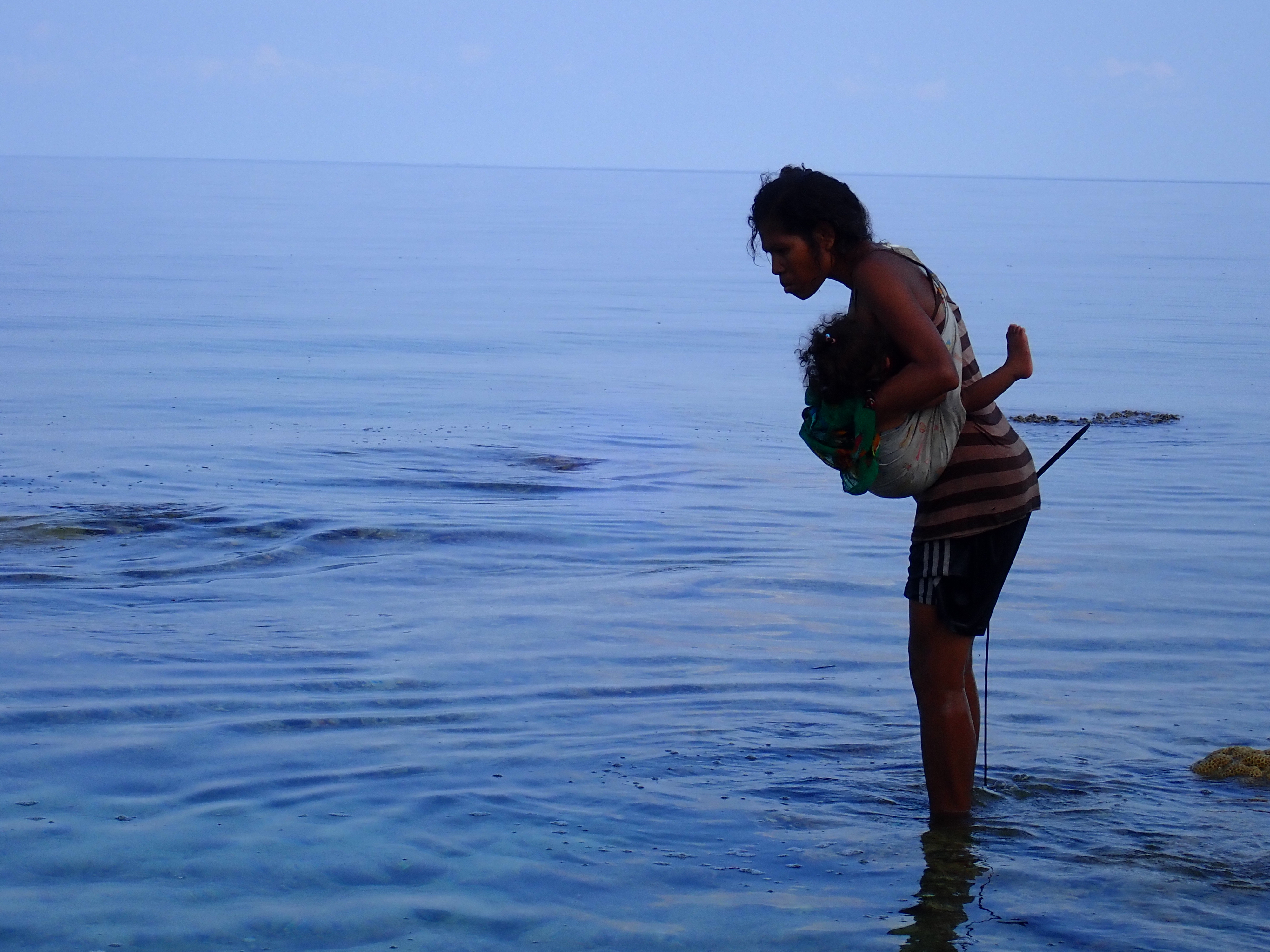
Picture: Maria Fernandez with her little daughter looking for shells and octopus in Atekru, Atauro Island, East Timor.
© Ariadna Burgos
More than a fishery: ark clams (piangua, Anadara spp.) and their biocultural importance and livelihood vulnerability
Ana M. Ortiz1,3, César Lemos-Lucumi1, Diana V. Gallego-Sanchez1, María A. Chará1, Jareth M. Zarta1, Jaime Cantera-Kintz1,3, Edgardo Londoño-Cruz1,2, Luz Ángela López de Mesa1,2,3
1Department of Biology, Universidad del Valle, Cali, 760042, Colombia
2Intertidal and Shallow Subtidal Rocky Ecosystems Research Group (Lithos), Cali, 760042, Colombia
3Estuarine and Mangrove Ecology Research Group (Ecomanglares), Cali, 760042, Colombia
Keywords: small-scale fisheries, socio-ecological systems, cultural importance, economic importance, Herfindahl-Hirschman index, traditional knowledge, mollusc, mangrove ecosystem
Ark clam fisheries of Anadara tuberculosa and A. similis, locally known in Colombia as piangua, play a key role in supporting communities along their geographic distribution. Nevertheless, piangua faces today increasing social-ecological threats. This study investigates the cultural and economic role of piangua in Bahía Málaga, Colombia, focusing on Afro-descendant communities. Utilizing socio-ecological methods, the study analyzed livelihoods, gender disparities, and ecological perceptions of piangua in the community. This methodology included semi-structured interviews (n=48) and the estimation of both a Cultural Importance index (CII) and the Herfindahl-Hirschman economic diversification index (HHI), as well as an assessment of local perceptions of piangua threats and availability over recent decades. The results revealed piangua as culturally vital, where 56% of respondents scored CII values >0.6, with women showing higher cultural attachment than men. Fifty-four percent of women relied on piangua as their primary income source; however, men earned twice the monthly income ($363 vs. $183 USD) through other extractive activities like logging and fishing. The HHI and income analysis indicated moderate income concentration (0.4–1.0) in the community. Results suggested that although women engaged in multiple income activities, their income streams were not well-diversified. Over 90% of respondents reported declining piangua harvests since the 1970s, identifying overexploitation (e.g. destructive harvesting by outsiders, non-compliance with minimum harvest size) and mangrove degradation as key threats. Piangua sustains both cultural identity and gendered livelihoods but faces collapse without interventions addressing ecological pressures and inequities. Tailored monitoring, fair management and inclusive policies must integrate local knowledge, especially women’s expertise, and provide equitable alternatives to ensure sustainability. Our approach allowed us to recognize piangua as cultural keystone species and a vital economic resource, providing a framework that contributes to conservation of both biological and cultural diversity.
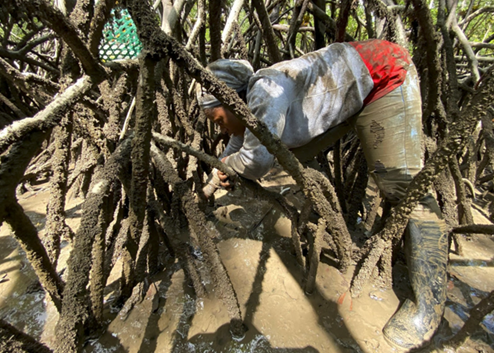
Picture: Martha Liliana Mosquera harvesting piangua (Anadara spp.) during low tide in a mangrove forest in Bahía Málaga, Colombia.
© Ana M. Ortiz


