|
|
|
|
Introduction Marine invertebrates, including molluscs, crustaceans, echinoderms, annelids, and cnidarians, play a crucial role in ocean ecosystems and are vital to the diets of many coastal communities. Far from being marginal, the exploitation of these species across various industries—such as food, souvenirs, and ornamentation—has persisted for millennia. Currently, marine invertebrate fisheries and landings yield several million tonnes of live weight each year, providing a wide array of uses and applications that raise numerous scientific, ecological, socioeconomic, and political challenges. Although theoretical and methodological advances have been made in the study of marine invertebrates across different research fields, these approaches often operate in parallel rather than in synergy. Today, the diversity of knowledge and practices related to marine invertebrates, along with the increasing vulnerability of these species to pollution, overfishing, and climate change, calls for a truly interdisciplinary dialogue and integration. 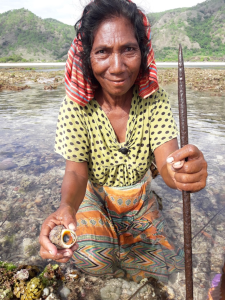 Background 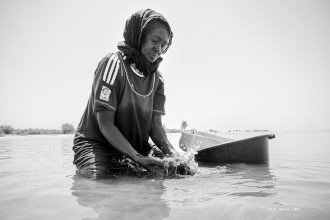 The conference seeks to bring together specialists from various scientific disciplines working on human–marine invertebrate relationships. It follows a previous conference held in 2018, focused on “Interdisciplinary approaches to the study of human and mollusc interactions: from prehistory to the present” (abstract book and special edition). This second edition expands the scope beyond molluscs to include crustaceans, echinoderms, cnidarians, and annelids and examines the relationships between humans and these different taxa. This broader focus introduces new social, economic, ecological, and political debates, enriching the dialogue on these often invisible but essential species in the economies, diets, and cultural practices around the world. Registration The conference is free of charge, but participants must register in advance HERE. Participation is limited to 110 attendees and will be granted on a first-come, first-served basis. Host institutions
Photo credits: Y. Thomas IRD, A. Burgos IRD, S. Hervé UBO, L. Billault IRD. |